Is Pet Insurance Worth It?
Premiums, deductibles, and payout caps are designed to be confusing. This guide breaks down what coverage actually buys you, and when self-insuring makes more sense.

Is pet insurance worth it? For most dog owners, the honest answer is: it depends on how much a five-figure emergency vet bill would actually disrupt your finances, not on some fixed formula. Pet insurance is a bet against a specific kind of risk, an expensive, unpredictable veterinary emergency, and like any insurance, whether it pays off for you personally depends on whether that risk actually shows up and how well you could otherwise absorb it.
This guide walks through how coverage actually works, what it typically costs, what it does and doesn't pay for, and how the calculation changes depending on your dog's age and breed.
How Pet Insurance Actually Works
Nearly all pet insurance in the US works on a reimbursement model, not a direct-pay model like most human health insurance. You pay the vet bill in full at the time of treatment, submit the itemized invoice to the insurer, and get reimbursed a percentage after your deductible is met. That means you need to be able to front the cost of an emergency surgery, sometimes several thousand dollars, before insurance actually reimburses you.
Three numbers determine what you actually get back: the annual deductible, the reimbursement percentage (typically 70%, 80%, or 90%), and the annual or per-incident payout cap, if the plan has one. A plan with a $500 deductible, 80% reimbursement, and a $5,000 annual cap on a $4,000 surgery would reimburse 80% of $3,500 (the bill minus the deductible), or $2,800, well under the cap. Run the same bill against a $250 annual limit some older or cheaper plans still carry, and you'd be reimbursed nowhere close to that.
Most plans also carry a waiting period, commonly 14-15 days for illness coverage and shorter, sometimes just 1-2 days, for accident coverage, before the policy actually pays out. That's the single most common reason a claim gets denied: something happens in the waiting window, before coverage technically started.
What Pet Insurance Typically Covers
Coverage generally splits into three tiers, and most providers sell them as separate plan levels rather than one bundled product.
| Tier | Typically covers | Typically excludes |
|---|---|---|
| Accident-only | Broken bones, swallowed objects, car-related injuries | Any illness, including cancer and infections |
| Accident + illness | The above, plus cancer, infections, chronic conditions diagnosed after enrollment | Pre-existing conditions, routine/preventive care |
| Accident + illness + wellness | The above, plus vaccines, annual exams, dental cleanings | Pre-existing conditions still typically excluded |
"Accident + illness" is the tier most owners actually mean when they say "pet insurance," and it's the one worth comparing most carefully across providers, since exclusion lists (hereditary conditions, breed- specific issues, behavioral treatment) vary meaningfully between plans.
What It Doesn't Cover
Pre-existing conditions are the biggest exclusion across every major provider: anything diagnosed, or showing symptoms of, before your coverage started or during the waiting period won't be covered, full stop, and this follows the dog even if you switch providers later. Some insurers distinguish "curable" pre-existing conditions (like a past ear infection that fully resolved) from chronic ones, and will cover a recurrence after a symptom-free period, typically 6-12 months; others won't.
Breed-specific hereditary conditions are commonly capped, sub-limited, or excluded entirely for high-risk breeds. Hip dysplasia in large breeds and brachycephalic airway syndrome in flat-faced breeds like Bulldogs and Pugs are two of the most frequently restricted categories, precisely because they're the conditions those breeds are most likely to actually need coverage for. Read a sample policy's breed-specific exclusions before enrolling a breed known for a particular condition, not after a diagnosis.
How Much Pet Insurance Costs
Premiums vary by species, breed, age at enrollment, location, and coverage level, but accident-and-illness plans for dogs commonly run somewhere in the neighborhood of $30-$70 per month, with cats typically running lower. Age at enrollment matters more than almost any other factor: enrolling a puppy locks in a lower base rate and avoids the pre-existing-condition problem entirely, since nothing's been diagnosed yet. Enrolling a seven- or eight-year-old dog means paying more per month for a policy that excludes whatever health issues have already shown up by that age.
Reimbursement percentage and deductible level are the two levers that move your premium the most: a 90%/low-deductible plan costs meaningfully more per month than a 70%/high-deductible plan on the same dog, because the insurer is taking on more of the actual cost risk. There's no universally right combination; it's a trade-off between a predictable monthly cost and a lower cost at claim time.
Types of Coverage: Choosing a Tier
Accident-only coverage makes the most sense for a strict budget and a young, otherwise healthy dog whose main risk is a physical accident rather than an age-related illness. It's meaningfully cheaper than full accident-and-illness coverage, but it leaves you fully exposed to cancer treatment, a common and expensive claim category in dogs over seven.
Wellness add-ons cover routine, predictable costs (vaccines, annual exams) rather than protecting against an unpredictable large bill, which is the actual purpose of insurance. For a lot of owners, paying those routine costs directly and putting the wellness-add-on premium difference into a separate savings account nets out about the same, without the paperwork.
Is It Worth It for Puppies and Kittens vs. Senior Pets?
Enrolling young is where pet insurance makes the strongest financial case: lower premiums, no pre-existing conditions yet, and coverage in place before anything happens. A puppy enrolled at 10 weeks old is the best-case scenario for the entire insurance model, since the insurer has no existing conditions to exclude and years of low-premium coverage ahead of any age-related claims.
Senior dogs are the hardest case to insure well. Premiums climb with age, and any condition that's already emerged by the time you're shopping for a policy gets excluded as pre-existing, precisely the conditions a senior dog is statistically most likely to need covered. Some providers cap enrollment age entirely (commonly around 12-14 years for new applicants). If your dog is already a senior with no existing conditions, insurance can still make sense against future unknowns; if they already have a chronic diagnosis, a policy bought now generally won't cover treatment for that specific condition.
Self-Insuring: The Alternative Worth Weighing
Self-insuring means setting aside the money you'd otherwise spend on premiums into a dedicated savings account for the dog, and covering vet costs out of that account directly. It works best for owners with enough savings discipline to actually fund the account consistently, and enough existing financial cushion to cover a large bill before the account has had years to grow. It works worst as an emergency plan for a young dog with no savings buffer yet, since a serious accident in year one leaves you with a bill and no accumulated fund to draw on. A hybrid approach, an accident-only plan plus a smaller self-funded savings cushion for routine and lower-cost care, is a reasonable middle ground many owners land on.
How to Compare Plans Before You Enroll
Providers make side-by-side comparison harder than it should be by using different deductible structures (annual vs. per-incident) and different definitions of what counts as a single "incident." A few checks matter more than the headline premium:
- Read the full breed-specific exclusion list for your dog's breed, not just the general exclusions page.
- Confirm whether the deductible is annual or per-incident. Per-incident deductibles that reset with every new condition cost more over a year with multiple issues.
- Check whether the reimbursement percentage applies to the vet's actual bill or to a "benefit schedule" that caps reimbursement per procedure regardless of what you were charged. Benefit-schedule plans are usually cheaper and pay out less on real bills.
- Ask specifically about behavioral treatment coverage. Some plans exclude behavioral conditions like severe separation anxiety or aggression entirely, treating them as training issues rather than medical ones, even when a vet behaviorist is involved.
- Look up the insurer's claim-denial and complaint history through your state's insurance department, not just the company's own marketing.
It's also worth checking how a claim connects to an existing food sensitivity or allergy diagnosis. An elimination trial for a suspected food allergy can involve several vet visits and prescription-diet costs, and whether that's reimbursed depends on whether the underlying condition was diagnosed before or after your coverage started.
State Regulation and Your Rights as a Policyholder
Pet insurance is regulated at the state level, not federally, and oversight has tightened in recent years. California's pet insurance law, effective 2022, requires insurers to provide a standardized disclosure at the point of sale spelling out the deductible structure, reimbursement basis, and any age-related restrictions in plain language, specifically because regulators found buyers were routinely confused by the fine print. Many other states have adopted some version of the National Association of Insurance Commissioners' Pet Insurance Model Act, which sets baseline disclosure and advertising standards insurers have to meet.
If a claim gets denied and you believe it was handled unfairly, your state's Department of Insurance, not just the company's internal appeals process, is the right place to file a complaint. State insurance regulators track complaint volume by company, and that data is usually a more reliable signal than star ratings on a review site.
A Worked Example: Five Years of Premiums vs. One Bad Year
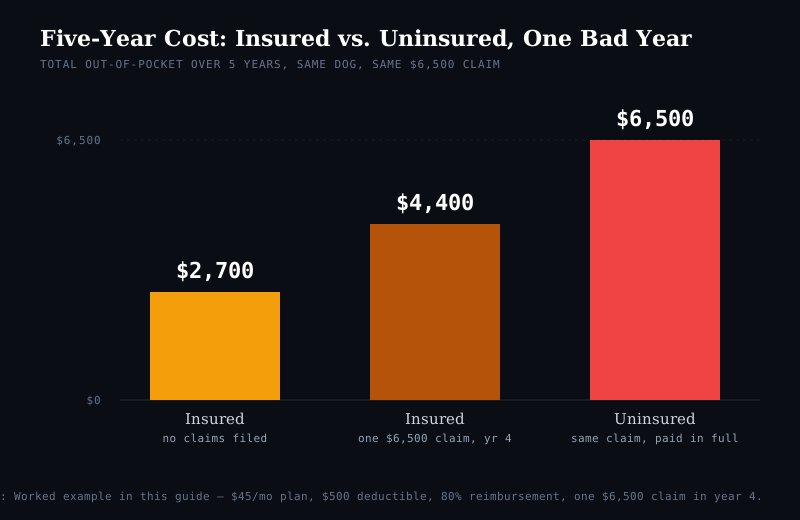
Take a mid-size mixed-breed dog enrolled as a puppy on a $45/month accident-and-illness plan, $500 annual deductible, 80% reimbursement. Over five uneventful years, that's $2,700 in premiums paid, with no claims to offset it. On paper, self-insuring the same amount would have looked like the better bet.
Now change one variable: in year four, the dog needs emergency surgery for a foreign-body obstruction, a genuinely common claim in dogs that chew on things they shouldn't, running $6,500. With insurance, after the $500 deductible, 80% of the remaining $6,000 is reimbursed, or $4,800, bringing the effective five-year cost down to roughly $4,400 net of that one claim. Without insurance and without a fully-funded savings cushion in place by year four, that $6,500 is an out-of-pocket hit in full.
Neither outcome is guaranteed. Plenty of dogs go their whole lives without a major claim, in which case self-insuring wins outright. The honest way to decide isn't which scenario sounds more likely; it's whether you could comfortably absorb the surgery scenario in cash today, right now, without insurance. If the answer is no, the premium is buying real protection. If the answer is yes, you're paying for certainty rather than for money you didn't have.
Embed this graphic
Conclusion: Running the Numbers for Your Dog
Pet insurance is worth it when the math works in your specific situation: a premium you can sustain every month, a deductible and reimbursement structure that would meaningfully help in an actual emergency, and a dog young enough to enroll before anything's excluded. It's a weaker bet for an already-senior dog with existing conditions, where a self-funded savings cushion often does more real work. Read the sample policy documents, not just the marketing page, before deciding either way; the exclusion list is where the real answer lives.
Frequently Asked Questions
How much is pet insurance?
Accident-and-illness plans for dogs commonly run around $30-$70 a month, depending on breed, age at enrollment, location, and coverage level. Cats typically cost less than dogs to insure.
Is pet insurance worth it?
It depends on your dog's age at enrollment and how well you could otherwise absorb a large, unexpected vet bill. It makes the strongest case for young, newly enrolled pets and the weakest case for a senior dog with existing conditions.
How does pet insurance work?
You pay the vet bill upfront, then submit the itemized invoice for reimbursement. The insurer reimburses a set percentage of the bill above your deductible, up to any payout cap the plan carries.
How much is dog insurance?
Dog insurance typically costs more than cat insurance, commonly in the $30-$70 monthly range for accident-and-illness coverage, with large and brachycephalic breeds often priced higher due to elevated claim risk.
How much does pet insurance cost overall, including add-ons?
Adding a wellness rider for routine care typically adds $10-$25 a month on top of a base accident-and-illness premium. Whether that's worth it depends on whether you'd otherwise budget for those routine costs anyway.
How much is pet insurance for a cat?
Cat premiums generally run lower than dog premiums for comparable coverage, often in the $15-$40 monthly range, reflecting cats' typically lower average claim costs.
Should I get pet insurance?
If a four- or five-figure emergency vet bill would genuinely strain your finances, and your pet is young enough to enroll before anything's excluded as pre-existing, insurance is worth seriously considering. If you have a solid emergency fund already, self-insuring is a reasonable alternative.
What does pet insurance cover?
Accident-and-illness plans typically cover injuries, infections, chronic conditions diagnosed after enrollment, and often cancer treatment. Wellness add-ons can extend coverage to vaccines and annual exams.
What does pet insurance not cover?
Pre-existing conditions are the near-universal exclusion. Many plans also cap or exclude certain breed-specific hereditary conditions, and routine care isn't covered unless you've added a wellness rider.
Is pet insurance worth it for a puppy?
This is generally the best-case scenario for insurance: lower premiums, no existing conditions to exclude, and coverage in place before anything happens.
Is pet insurance worth it for a senior dog?
It's a harder case. Premiums are higher, and any condition already present by enrollment is excluded as pre-existing. It can still be worth it against future unknowns, but it won't help with conditions your dog already has.
Is pet insurance worth it for cats?
The same logic applies as for dogs: it's strongest for young cats enrolled before any diagnosis, and weaker for older cats with existing conditions, where the exclusion would apply anyway.
Is preventative or wellness pet insurance worth it?
Wellness coverage pays for predictable costs you'd likely pay anyway, so it functions more like a budgeting tool than true insurance. For many owners, saving the premium difference directly covers the same routine costs.
Is pet insurance a scam?
No, but it's a product with real limitations that marketing pages don't always emphasize: the reimbursement model requires fronting costs yourself, and pre-existing exclusions are broader than many owners expect going in.
When is it worth claiming on pet insurance?
Once you're past the waiting period and the bill clears your deductible by enough that the reimbursed amount is worth the paperwork, generally anything beyond a routine, low-cost vet visit.