Best Dog Food: A Buyer's Guide by Need & Breed
Choosing a dog food isn't just brand loyalty. It's matching an ingredient list to a specific dog's stomach, allergies, breed, and life stage. This guide walks through what actually separates a good formula from clever packaging.
What is the best dog food? There isn't a single correct answer, and any guide that gives you one brand name and moves on is skipping the part that actually matters. The best dog food for a seven-year-old Labrador with a grass allergy looks nothing like the best dog food for a ten-week-old Great Dane puppy. Both dogs need enough protein, the right calorie density for their size, and an ingredient list that doesn't trigger whatever sensitivities they happen to have. The brand on the bag matters far less than whether the formula fits the dog eating it.
This guide breaks that decision down by the variable that actually drives it: format, life stage, known sensitivities, and breed size. By the end, you should be able to look at a bag of food and know within a few minutes whether it's a reasonable fit, without relying on a brand's own marketing copy to tell you.
Dry, Wet, Raw, and Freeze-Dried: How the Formats Actually Compare
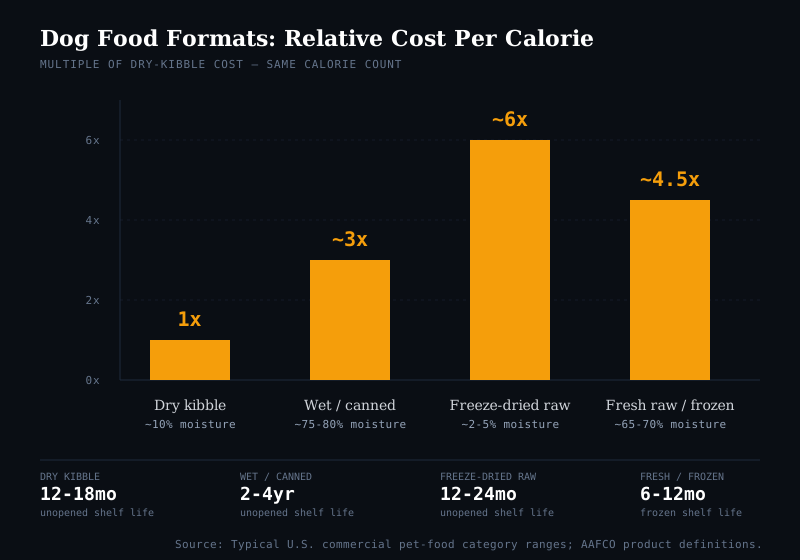
Every dog food fits into one of four broad formats, and each trades convenience, cost, and shelf stability differently. None of them is inherently "best." Each solves a different problem.
Dry kibble is cooked at high heat and extruded, which gives it a long shelf life and low cost per calorie. That processing also destroys some heat-sensitive nutrients, which manufacturers add back through synthetic fortification. It's the most affordable format by a wide margin, and the easiest to free-feed or portion precisely, but the trade-off is a higher starch content than the other three formats, since starch is what allows the extrusion process to work in the first place.
Wet food is roughly 75-80% moisture, against roughly 10% in kibble, which makes it useful for dogs that under-drink or have kidney or urinary concerns where hydration matters. It's also generally more palatable to picky eaters, since the higher fat and moisture content carries more aroma. The trade-off is cost per calorie, which typically runs two to four times higher than a comparable dry formula, and a shorter shelf life once opened.
Raw and freeze-dried-raw formats skip the extrusion step entirely. Freeze-drying removes moisture through vacuum sublimation rather than heat, which preserves more of the food's natural nutrient profile than kibble's cooking process does. Both formats carry a real handling consideration: raw and freeze-dried meat can carry Salmonella or Listeria, and the CDC specifically advises care around raw pet food in households with young children, elderly members, or anyone immunocompromised. The CDC's guidance on raw pet food covers safe handling in more detail. If you're considering a raw or freeze-dried diet, look for products that have undergone high-pressure pasteurization, which reduces pathogen risk without a full cooking step.
| Format | Typical moisture | Cost per calorie | Shelf life (unopened) |
|---|---|---|---|
| Dry kibble | ~10% | Lowest | 12-18 months |
| Wet / canned | ~75-80% | 2-4x kibble | 2-4 years |
| Freeze-dried raw | ~2-5% | 4-8x kibble | 12-24 months |
| Fresh raw / frozen | ~65-70% | 3-6x kibble | 6-12 months frozen |
Embed this graphic
Best Dog Food by Life Stage
Puppies
Puppy formulas run higher in protein, fat, and calcium than adult formulas, and large-breed puppy formulas specifically control calcium and calorie density to slow growth rate. That last point matters more than most owners realize: feeding a large-breed puppy (one projected to exceed roughly 70 pounds as an adult) a regular puppy formula, rather than a large-breed-specific one, has been linked to a higher rate of developmental orthopedic issues like hip dysplasia, because rapid growth puts more stress on immature joints. Check the bag for an AAFCO statement that specifically says "growth" or "large breed growth," not just "all life stages." The puppy months are also the right window to start basic training fundamentals, since food-motivated training works best while a puppy is still forming habits.
Adults
Most healthy adult dogs do fine on a standard adult maintenance formula with 18-25% protein and moderate fat. Activity level matters more than age here: a working or highly active dog needs more calories and often more protein than a mostly sedentary housedog of the same breed and weight.
Seniors
Senior formulas typically reduce calorie density to offset slower metabolism, while often keeping protein levels comparable to adult formulas rather than cutting them, since older dogs need protein to maintain muscle mass just as much as younger dogs do. Some senior formulas add glucosamine and chondroitin for joint support and reduced phosphorus for dogs with early kidney changes; talk to your vet about whether that's relevant before switching.
Best Dog Food for Sensitive Stomachs
A sensitive stomach shows up as loose stool, gas, or intermittent vomiting that isn't tied to an obvious allergen. It's often a digestive tolerance issue rather than an immune reaction, and it responds differently to treatment than a true food allergy does.
- Look for a single, named animal protein source listed first (chicken, salmon, or lamb, not a vague "meat meal").
- Moderate fat formulas tend to sit better than high-fat formulas for dogs prone to loose stool.
- Added prebiotic fiber (chicory root, beet pulp in modest amounts) can support stool quality; large amounts of beet pulp as a primary filler is a different story.
- Introduce any new formula over 7-10 days, mixing in increasing ratios with the old food, rather than switching overnight.
If loose stool persists past two weeks of a gradual transition to a sensitive-stomach formula, that's a signal to involve a vet rather than keep cycling through brands. Chronic GI symptoms can indicate inflammatory bowel disease, exocrine pancreatic insufficiency, or a parasite load that diet changes alone won't fix.
Best Dog Food for Allergies
True food allergies in dogs are less common than owners assume; most "food allergy" symptoms owners report are actually environmental allergies (pollen, dust mites, fleas) showing up as itchy skin, which gets blamed on the last food change because that's the most recent thing that changed. That said, real food allergies do exist, and the most common triggers in dogs are chicken, beef, dairy, wheat, egg, and soy, roughly in that order of frequency in published veterinary allergy studies.
A limited-ingredient diet (LID) with a novel protein the dog hasn't eaten before, such as venison, rabbit, or duck for a dog raised on chicken and beef, is the standard elimination approach. A true food allergy diagnosis requires an 8-12 week elimination trial with a single protein and carbohydrate source, ideally under veterinary guidance, not just switching bags until symptoms improve. Hydrolyzed protein formulas, where the protein is broken down small enough to avoid triggering an immune response, are a prescription-strength option for dogs that don't respond to a standard novel-protein diet. An elimination trial and any follow-up vet visits aren't free, which is one of the more concrete cases where knowing what your coverage actually pays for matters before symptoms show up, not after.
Best Dog Food by Size and Breed
Size drives more of the "right" formula than breed identity does. Small breeds have faster metabolisms and higher calorie needs per pound than large breeds, and small-breed kibble is sized down so it's actually chewable and safe for a smaller jaw. Large and giant breeds need the growth-rate control covered above as puppies, and as adults often benefit from joint-support additions given their higher rate of hip and elbow dysplasia.
A few breed-specific patterns worth knowing: Golden Retrievers and Labradors run a meaningfully elevated risk of certain cancers and should generally avoid free-feeding, since both breeds are prone to obesity, which compounds joint and cardiac risk. German Shepherds have a higher-than-average rate of exocrine pancreatic insufficiency, which shows up as chronic loose, greasy stool despite eating well, and often needs enzyme supplementation, not just a food swap. Bulldogs and other brachycephalic breeds do well on smaller kibble pieces they can actually pick up with a shortened jaw.
How to Read a Dog Food Label (and Spot the Red Flags)
Ingredients are listed by pre-cooking weight, which is why a fresh meat listed first can still contribute less actual protein than a named meat meal listed second, since meal is already dehydrated and meat is roughly 70% water before cooking. A meaningful label read looks past the first ingredient to the AAFCO nutritional adequacy statement, the guaranteed analysis panel, and the calorie content per cup, not just marketing language on the front of the bag.
- Look for an AAFCO statement naming a specific life stage the food is formulated or tested for.
- Named protein sources ("chicken," "salmon") are more transparent than vague ones ("meat," "animal fat," "poultry by-product" without species).
- Be skeptical of "grain-free" as an automatic upgrade. In 2019 the FDA opened an investigation into a possible link between grain-free diets heavy in peas, lentils, and other legumes and dilated cardiomyopathy (DCM) in dogs. The agency never established a definitive causal ingredient, and the investigation was closed without a formal recall, but the case is a reminder that "grain-free" isn't automatically healthier. Most dogs digest grains like rice and oats perfectly well; true grain allergies are uncommon.
- Watch for excessive filler carbohydrates stacked high on the ingredient list under multiple names (corn, corn gluten meal, corn bran all in one formula, for instance).
Our Review Methodology
We don't rank dog food brands on a single overall score, and we don't accept payment to feature a formula, consistent with the general research approach described on the homepage. Instead, we evaluate against AAFCO nutritional adequacy standards for the relevant life stage, cross-check ingredient sourcing and named-protein transparency, and match specific formulas to specific needs (sensitive stomach, allergy, breed size) rather than declaring one bag universally best. Where the evidence is mixed, as with grain-free diets and cardiac risk, we say so rather than picking a side for the sake of a clean recommendation.
Conclusion: Choosing Food for the Dog You Actually Have
Skip the search for a single universally best dog food. Start instead with what's true about your own dog: their life stage, their size and breed tendencies, and whatever sensitivities they've already shown you. A large-breed puppy needs growth-rate control that a senior Chihuahua never will. A dog with a grass allergy that gets mistaken for a food problem needs a different fix than a dog with a genuine chicken allergy. Match the formula to those specifics, read past the front of the bag to the AAFCO statement and ingredient list, and you'll end up with a better outcome than any single "best of" ranking could give you.
Frequently Asked Questions
What is the best dog food?
There's no single best dog food across all dogs. The right choice depends on life stage, breed size, and any known sensitivities. A formula matched to those specifics will outperform a generically "top-rated" brand that ignores them.
What is the best dry dog food?
A good dry formula names a specific protein source first or second, carries an AAFCO statement for the right life stage, and keeps filler carbohydrates from dominating the ingredient list. Beyond that, "best" depends heavily on your dog's individual tolerance.
What is the healthiest dog food?
"Healthiest" isn't one formula, it's the formula that meets AAFCO adequacy standards for your dog's life stage without triggering a sensitivity your dog actually has. A food that's excellent for one dog can cause loose stool in another with a different tolerance profile.
What is the best puppy food?
Look for an AAFCO "growth" statement, and for dogs projected to exceed roughly 70 pounds as adults, a large-breed-specific growth formula that controls calcium and calorie density to slow bone growth and reduce joint-development risk.
How much is dog food?
Dry kibble typically runs the lowest cost per calorie of the major formats. Wet food runs roughly two to four times that, and raw or freeze-dried formulas run three to eight times as much, depending on the protein source and processing method.
Is grain-free dog food better for my dog?
Not automatically. Most dogs digest grains like rice and oats without any issue, and true grain allergies are uncommon. The FDA investigated a possible link between grain-free legume-heavy diets and dilated cardiomyopathy in 2019 without establishing a definitive cause, which is a reason for caution, not automatic avoidance.
What is the best dog food for a sensitive stomach?
Look for a single named protein, moderate fat content, and modest prebiotic fiber. Introduce any new formula gradually over 7-10 days. If loose stool persists past two weeks on a suitable formula, involve a vet rather than continuing to switch brands.
What is the best dog food for allergies?
A limited-ingredient diet built around a novel protein the dog hasn't eaten before, such as venison or duck for a dog raised on chicken and beef, is the standard approach. A confirmed diagnosis needs an 8-12 week elimination trial, ideally guided by a vet.
Which brand of dog food is best?
We don't rank brands on a single score, because the right formula depends on your specific dog. Evaluate any brand against AAFCO adequacy for the right life stage, named-protein transparency, and fit for your dog's known sensitivities.
What are the top healthiest foods for dogs?
Rather than a fixed top list, look for formulas with a named protein source, an appropriate AAFCO life-stage statement, and moderate, identifiable carbohydrate sources, then match those candidates against your specific dog's life stage and sensitivities.
What is the best dog food for large dogs?
As puppies, a large-breed-specific growth formula that controls calcium and calorie density. As adults, a standard maintenance formula appropriate to activity level, often with joint-support additions given large breeds' higher rate of hip and elbow dysplasia.
Is wet or dry food better for dogs?
Neither is universally better. Dry food is more affordable and convenient; wet food carries more moisture, which helps dogs with urinary or kidney concerns, and tends to be more palatable for picky eaters. Many owners mix both.
How much dog food should I feed my dog?
Start with the feeding guide on the bag as a baseline, adjusted for your dog's actual activity level and body condition rather than followed rigidly. A visible waist and easily felt (but not visible) ribs are a better guide than the bag's chart alone.
Is raw dog food safe?
Raw and freeze-dried raw diets carry a real risk of Salmonella and Listeria contamination, which matters most in households with young children, elderly members, or anyone immunocompromised. High-pressure pasteurized products reduce that risk without a full cooking step.
How often should I switch my dog's food?
There's no fixed schedule. If your dog is doing well on a formula that matches their life stage and has no ongoing digestive or skin issues, there's no need to switch. When you do switch, transition gradually over 7-10 days.